
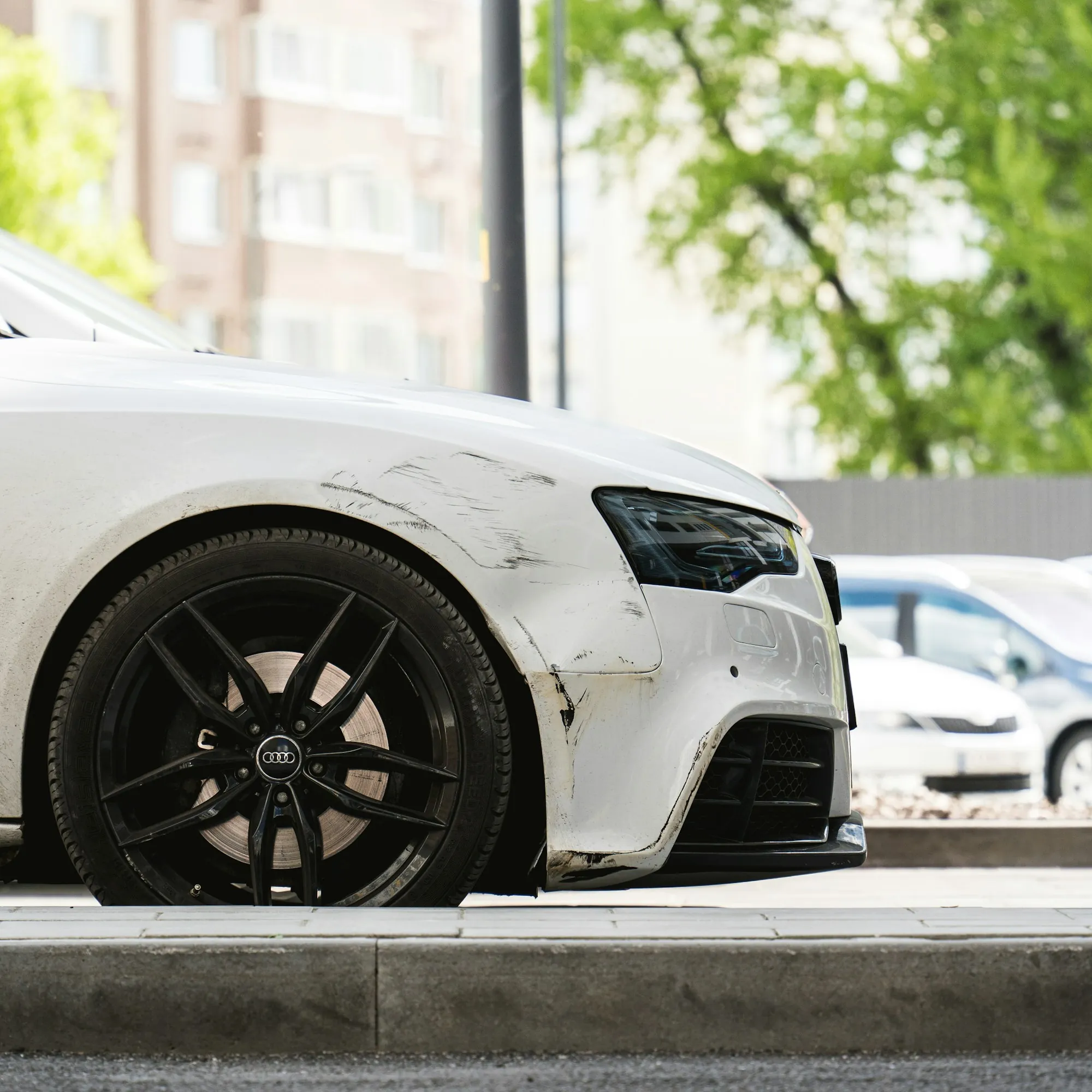
Creases and cracked paint
Dent Repair in St. Paul When the Paint Has Cracked
Some dents can be massaged out from behind, and some have folded the metal or broken the paint badly enough that the panel needs to be worked, smoothed and refinished to look right again.
Find out what your dent needs at (000) 000-0000When a Dent Needs More Than Massaging
Conventional dent repair is the right path when the paint over a dent has cracked or flaked, or when the metal has folded into a crease so sharp that pushing it from behind would only stretch it further. Out here that kind of damage often comes from a fence post on a narrow drive, a trailer tongue swinging around in a gravel lot or a piece of lumber that slid off a work truck in one of the new subdivisions near McCreary Road. The process brings the metal back as close to its original shape as possible first, so that only a thin skim of filler is needed to smooth what remains. That matters because filler is meant to perfect a surface, not to build one, and a repair that relies on thick filler tends to show itself in time. After shaping, the area is primed, blocked smooth and refinished with paint matched to your car, then blended outward so the edges disappear. We always look first to see whether paintless repair could work, and tell you plainly if it cannot.
What a Conventional Dent Repair Involves
Each stage below builds toward a surface that looks and feels like it was never damaged.
Dent assessment
We look at the depth, the sharpness of any crease and the condition of the paint to decide between paintless and conventional repair.
Metal shaping
Hammers, dollies and stud pullers bring the low areas up and the high areas down so the panel regains its original contour.
Stretched metal relief
Where a crease has stretched the steel, careful shrinking draws it back so the panel does not flex or pop later.
Filler kept to a whisper
A light coat of body filler smooths the minor waves that remain, applied only after the metal has done most of the work.
Blocking and priming
The area is sanded with long blocks and primed, which reveals and removes any low spots before color is applied.
Color-matched paint
Basecoat is tinted to your car's color and applied in the booth, then sealed under clear for gloss and protection.
Feathered edges
Color is faded into the surrounding panel so the repair has no visible border when the light hits it from an angle.
Polish and inspect
The finished area is polished and checked from several angles to be sure the surface reads smooth and even.
Walking a Dent From Damaged to Smooth
- 1
Decide on the method
We start by checking whether the paint is intact and whether the metal can be reached from behind. If paintless repair is a good fit, we will say so, since it keeps the original finish. When the paint is broken or the crease is too sharp, conventional repair is the honest choice.
- 2
Shape and smooth
The metal is worked back toward its original form until only small irregularities remain, which keeps filler to a minimum. A thin skim fills those last waves, and the area is blocked and primed until it is flat to the hand and the eye. Taking time at this stage is what keeps the repair from showing later.
- 3
Color and fade it in
Paint is mixed to your car's color, sprayed in the booth and blended into the panel so the transition fades away. After curing, the area is polished and inspected in different lighting. Then the car is ready to go home.
Why This Approach Holds Up
Metal does the work
Shaping the steel before reaching for filler gives a repair that stays smooth instead of shrinking or cracking down the road.
The right method first
We look for a paintless option before committing to paint, so you never end up with more refinishing than the dent actually needs.
Finish that fits in
Careful blending keeps the repaired area from looking like a patch, even under bright Texas sun.
Got a Crease That Will Not Go Unnoticed
Let us take a look and tell you which repair makes sense for it. You will hear the reasoning before we pick up a single tool.
Get a read on that crease at (000) 000-0000